How an infrared sauna works
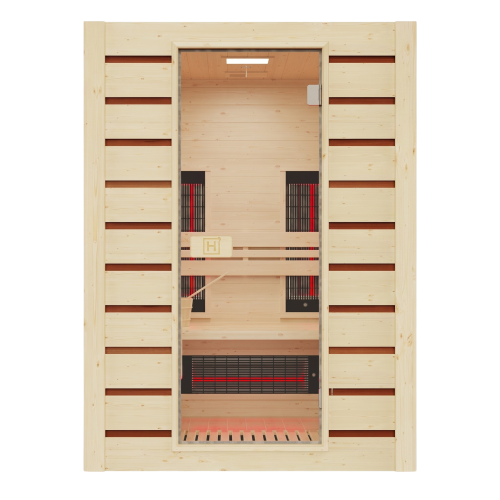
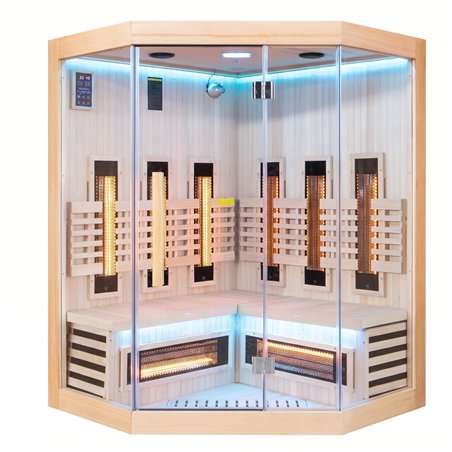
Infrared emitters operate within the same wavelength range as the heat produced by the human body, so the energy is absorbed into the first few millimetres of tissue rather than being wasted heating the air. This allows intense sweating at a moderate temperature, making it ideal for people who cannot tolerate the extreme heat of a Finnish sauna.
Benefits of infrared saunas
Low energy consumption and rapid heating. A two-person cabin typically uses around 1.5-2 kW and is ready in 10-15 minutes, compared with 30-45 minutes and 6-9 kW for a traditional sauna.
- Easy installation: panel-based assembly with no building work required and a 230 V power supply.
- Longer, more comfortable sessions: 15-20 minutes at 45-55°C.
- Muscle recovery: deep heat helps after exercise.
- Suitable for a wider range of clients: moderate heat broadens your target audience.
- Lower cost per session: essential if you plan to offer session packages or continuous use.
Far infrared and full spectrum: what is the difference?
Most cabins use far infrared (FIR), the most common wavelength range for sweating and relaxation. Full-spectrum systems also include near and mid-infrared wavelengths, each with a different penetration depth. This is the technology offered by Sunlighten in its mPulse range. If your wellness centre wants to stand out by offering specific treatment protocols, this option is worth considering.
How to choose your infrared sauna
- Capacity and dimensions: allow approximately 60-70 cm of bench space per person and check the available installation area, including ceiling height.
- Emitter type: carbon-fibre panels provide broad, even heat, while quartz or ceramic emitters deliver more targeted, intense heat.
- EMF level: check the emission data declared by the manufacturer if this is an important consideration for you.
- Wood: cedar, basswood and hemlock are the most common options due to their stability and heat resistance.
- Additional features: chromotherapy, audio, digital controls or a touchscreen significantly increase the perceived value of each session.
Frequently asked questions
What is the difference between an infrared sauna and a Finnish sauna?
An infrared sauna heats the body directly at 40-60°C with low energy consumption. A Finnish sauna heats the air to 80-100°C using a sauna heater with stones. The former is more comfortable and economical to operate, while the latter provides the classic wellness experience.
How long should an infrared sauna session last?
Between 15 and 20 minutes for a regular user. It is advisable to start with 10-minute sessions and stay hydrated before and after each session.
Does an infrared sauna require a special electrical installation?
Not for most home infrared saunas and one- to three-person models, which operate from a 230 V socket. Larger cabins may require a dedicated electrical circuit.
Can an infrared sauna be installed outdoors?
Only if the model is designed for outdoor use. Explore our outdoor saunas, which feature specific protection against moisture and temperature fluctuations.